
There’s a kind of confidence that comes from planning.
And then there’s a deeper kind of confidence that only comes from building something when planning doesn’t help—because the rules keep changing.
We took possession of our building in January 2020. The plan was simple: renovate and open in May. We thought that was realistic. We were motivated, working hard, and moving forward.
And then March happened.
If you opened or grew a business in 2020, you already know the truth: the difficulty wasn’t just the closures. It was the uncertainty—budget uncertainty, supply uncertainty, timeline uncertainty, and the emotional weight of building something you couldn’t fully control.
We opened September 8, 2020. And we were shut down again three months later.
This is what 2020 taught me about leadership and resilience—lessons I still carry into how we run Salon@Church in Welland today.
Leadership is deciding without perfect information
Before 2020, I thought leadership was having a strong plan and executing it well.
2020 showed me that leadership is often choosing a direction when no option feels fully safe.
When we shut down in March, we didn’t know:
- what our budget would be
- what supplies we could actually get
- what a realistic opening date would even mean
- whether reopening would last
There was no “right time.” Only a moment where you decide to keep going.
Why this matters: leaders don’t wait until every variable is stable. They set a standard and move forward with clarity and care.
Resilience isn’t intensity. It’s consistency.
In stressful seasons, the instinct is to push harder—longer hours, faster decisions, more urgency.
But intensity burns out teams and breaks standards.
What got us through was consistency:
- returning to the work every day
- making the next right decision
- keeping the space safe and secure
- continuing the renovation step by step, even when the finish line moved
Why this matters: resilience is the ability to keep your standards intact when everything around you tries to erode them.
Standards become your stability when the world isn’t stable
When your environment changes constantly, you start looking for what you can control.
For us, what we could control was:
- cleanliness
- communication
- client experience
- the pace and quality of our work
- the systems we built behind the scenes
Luxury isn’t “extra.” Luxury is reliable.
When everything feels uncertain, people crave an experience that feels steady and cared for. Standards create that.
Why this matters: standards aren’t a luxury detail. They’re a leadership tool.
You learn quickly what matters—and what doesn’t
2020 stripped away anything that wasn’t essential.
It forced clarity on:
- what we were truly building
- what kind of clients we wanted to serve
- what kind of team culture we wanted
- what we refused to compromise on
If you can’t operate normally, you have to operate intentionally.
Why this matters: resilience often looks like simplification. Doing fewer things, better.
The “this might not work” days are part of the build
There wasn’t one “this might not work” day. There were many.
The hardest part of 2020 wasn’t even the first shutdown. It was living in a loop of:
- open
- closed
- prepare
- pause
- re-open
- shut down again
There’s a unique exhaustion in building without certainty.
And yet, you still show up, because you’ve decided this is worth it.
Why this matters: the people who succeed aren’t the ones who never doubt. They’re the ones who keep moving while doubt is present.
The team needs calm leadership, not emotional whiplash
In unstable seasons, it’s easy to let fear lead the room—because everyone is feeling it.
But team culture is built in moments like that. People remember how leadership felt.
Resilience leadership looks like:
- clear communication (even when the message is hard)
- realistic expectations
- a focus on what can be controlled
- consistency in standards, tone, and follow-through
Why this matters: when clients say they can “feel the culture,” what they’re feeling is stability.
The opening isn’t the moment. The first service is.
People love the idea of a grand opening. The ribbon-cutting. The announcement.
But the moment it becomes real is quieter.
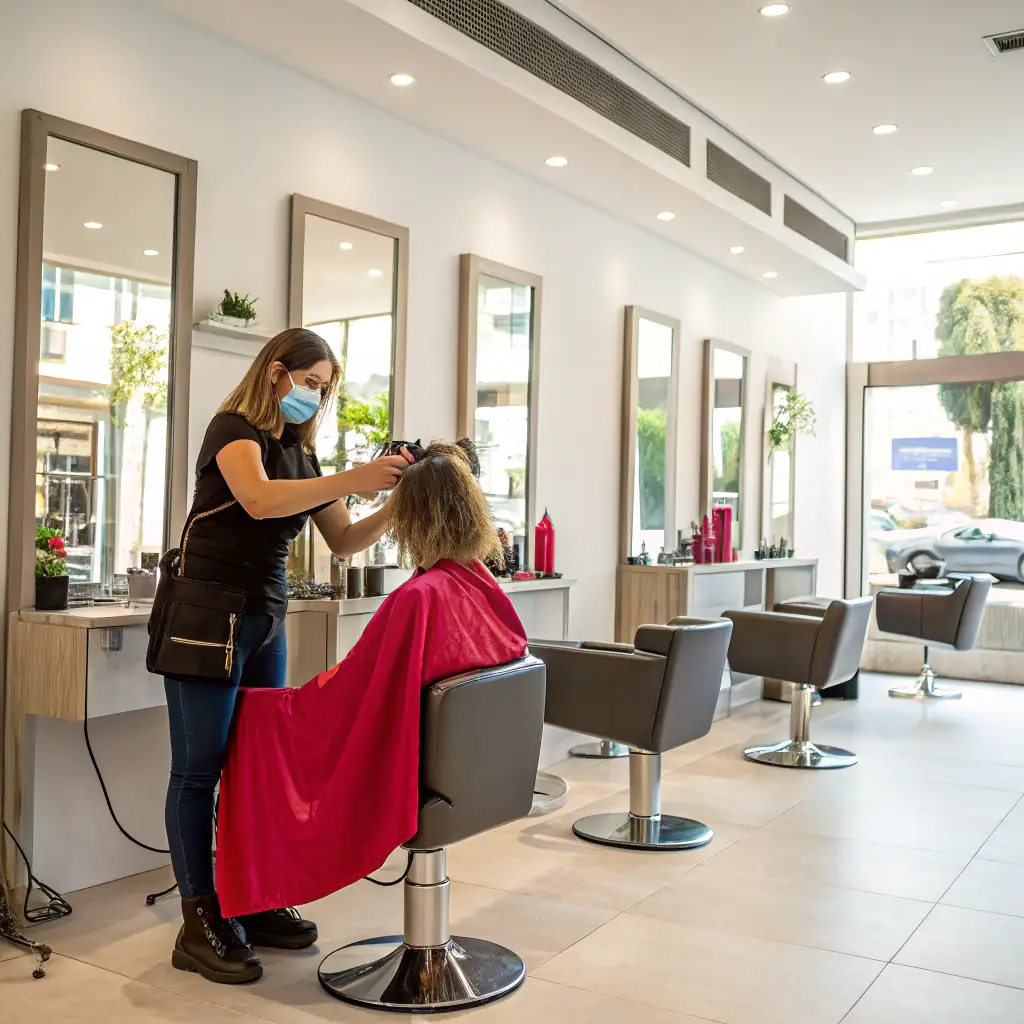
For us, the moment it truly became real was when the chairs and mirrors were in, and we did the first haircut. After months of renovation, uncertainty, and constantly shifting timelines, that first service meant:
This is not just a project.
This is a working standard.
Why this matters: resilience is built by returning to the craft. The work itself is what anchors you.
Community support is real—but it’s earned through care
We’re proud of how the Welland–Niagara community has responded. That support didn’t come from marketing. It came from showing up for the community, restoring a space that needed care, and building something people could feel proud of.
When clients walk in and say, “Oh wow,” they’re not only reacting to the ceiling. They’re reacting to what it represents: restoration, effort, and intention.
Why this matters: community trust grows when people see you invest in excellence, not shortcuts.
What I still believe because of 2020
I don’t romanticize that year. It was hard. It was uncertain. It forced decisions that no one wanted to make.
But it clarified something for me that became a permanent part of Salon@Church:
There is no perfect time.
There is only a standard you choose to keep.
And when you lead with standards—consultation, timing, maintenance, communication—you create an experience that feels steady even when life isn’t.
FAQs
How did you decide when to open?
We realized there would never be a “perfect” window. We chose September 8, 2020, and committed to opening with standards intact.
What was the biggest challenge?
Uncertainty. Not knowing budgets, timelines, closures, or what was realistic from one month to the next.
What did 2020 change about how you lead now?
It made standards non-negotiable. It reinforced that calm, clear systems protect the team and the client experience.
Why does that year still matter for the brand today?
Because it shaped the culture: consistency, resilience, and a consultation-first approach that prioritizes integrity and long-term results.